Is Store-Bought Sauce Healthy for Babies and Toddlers? What Parents Should Know

Overview
Store-bought sauces often become part of children's meals because they:
- improve acceptance of food
- add flavor to bland textures
- make feeding easier for busy families
But for babies and toddlers, what goes into these sauces matters more than most parents realize.
This guide explains how to think about store-bought sauces without fear and without blind trust.
1. Babies and toddlers are still developing
Between 6 months and 3 years:
- taste preferences are being formed
- gut microbiome is developing
- salt and sugar tolerance is being shaped
- long-term food expectations are being set
This means repeated exposure matters more than occasional use.
2. The main concerns with store-bought sauces
Many commercial sauces contain:
- high added sugar
- excess sodium
- preservatives
- artificial flavours or colors
These ingredients are not harmful in tiny, occasional amounts—but when used daily, they shape taste preferences and normalize ultra-processed flavours.
3. What to check on labels (simple checklist)
When choosing a sauce for young children, look for:
- short ingredient list
- no artificial colors or flavours
- no preservatives
- lower added sugar
- no added MSG
- real tomato or vegetable content
Avoid relying on marketing terms like "natural" or "kid-friendly." The ingredient list matters more than the front label.
4. When is sauce appropriate for babies?
For babies under 1 year:
- sauces are generally unnecessary
- whole foods and simple textures are best
- salt and sugar should be minimal
For toddlers:
- sauces can be introduced occasionally
- used in small amounts
- paired with real food, not replacing it
5. Sauce as a bridge, not a dependency
Sauces can help:
- encourage trying new textures
- make unfamiliar foods less intimidating
But overuse can:
- train children to expect strong flavours
- reduce acceptance of plain foods
- increase reliance on sweet or salty taste
Aim for:
- small dips
- gradual reduction over time
- tasting the food without sauce occasionally
6. Homemade vs store-bought: realistic perspective
Homemade sauces:
- allow full ingredient control
- avoid preservatives
- require time and storage
Store-bought sauces:
- offer convenience
- vary widely in quality
There is no moral hierarchy here. The practical goal is to choose better versions of packaged foods when they are part of regular meals.
Some brands position themselves with:
- no preservatives
- no artificial colors or flavours
- simpler ingredient lists
These are preferable options for frequent use compared to heavily processed alternatives.
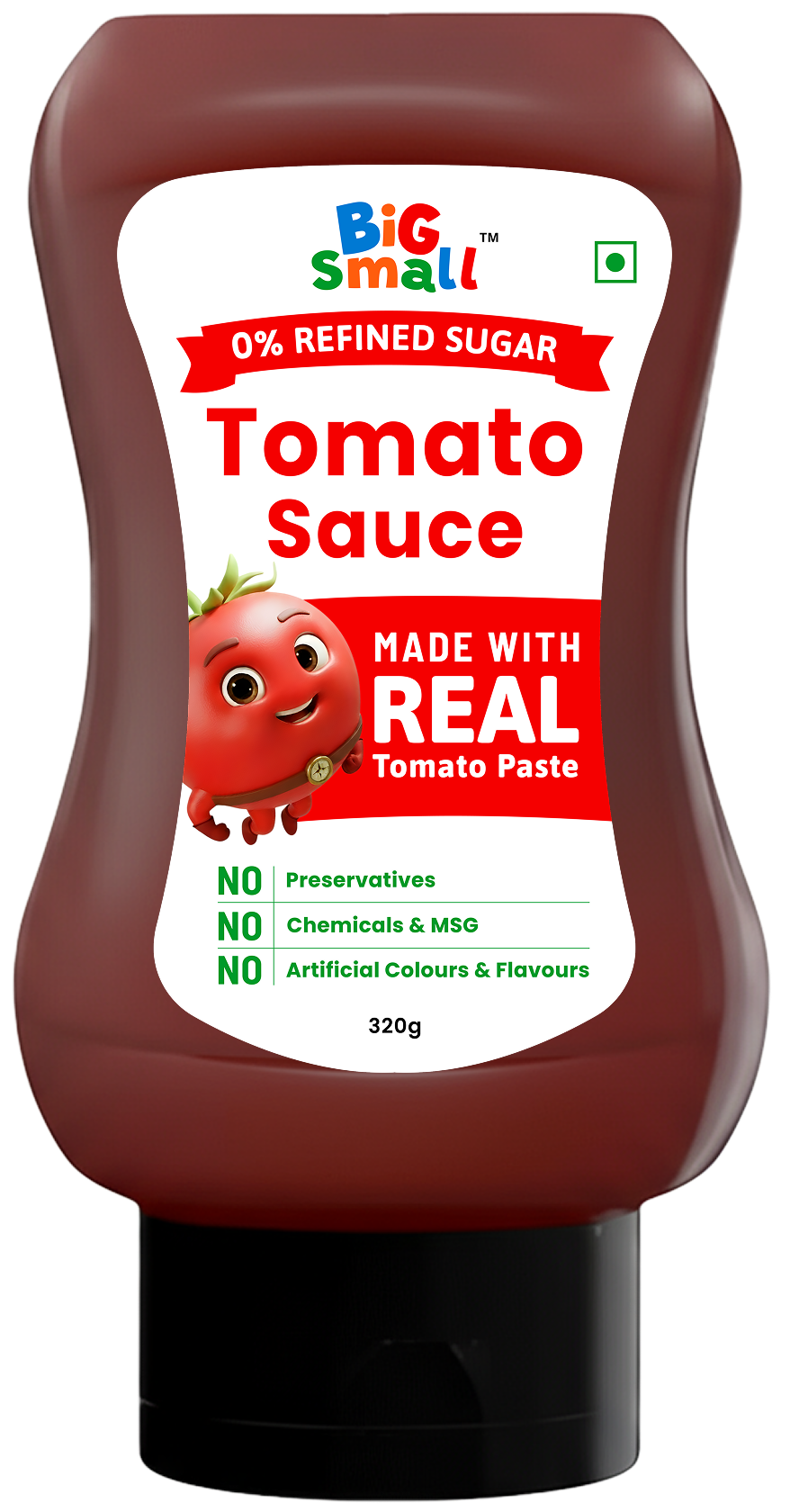
BiGSmall Kids Tomato Sauce
Real tomatoes, Jaggery, No Refined Sugar, No Added Preservatives, No Artificial Flavours, No Artificial Colors or Chemicals | Sweetened Only with Jaggery Made for everyday meals.
Shop now7. The bigger habit you are teaching
Children learn:
- what "normal food" looks like
- how flavours are supposed to taste
- whether food comes from packets or kitchens
Using sauces mindfully teaches:
- flavor can enhance food, not replace it
- food can be simple
- not every meal needs strong stimulation
Final takeaway
Store-bought sauces are not "bad." But they are not neutral either.
For babies and toddlers:
- frequency matters more than perfection
- ingredients matter more than branding
- habits matter more than occasional convenience
Choose simpler options, use sauces sparingly, and keep whole foods at the center of your child's meals.
Related posts

Tomato Sauce With Preservatives vs. Without Preservatives: What Parents Should Know for Their Children
Tomato sauce is a daily food for many children—but what’s inside it matters more than most parents realize. This guide explains the difference between tomato sauces with preservatives and preservative-free options, how frequent exposure affects children, and how to make informed, balanced choices without food fear.
9 min read
How to Get Your Kid to Eat Vegetables (Without Forcing or Bribing)
Getting children to eat vegetables can feel like a daily battle. This practical, research-informed guide shares realistic strategies to build acceptance of vegetables without pressure, power struggles, or food anxiety.
6 min read
What to check before buying ketchup for children
Learn how to read labels, understand sugar, preservatives, and ingredients, and make more informed everyday food choices.
4 min read