What to check before buying ketchup for children

Overview
Tomato ketchup is one of those foods that quietly becomes part of everyday life in homes with children. It shows up on dosas, sandwiches, rotis, fries, nuggets, and lunchbox snacks. For many kids, it’s not an occasional treat, it’s something they eat regularly.
That’s exactly why parents often pause and ask:
“Is the ketchup we’re using actually okay for children?”
Not all tomato sauces are made with kids in mind. Many are designed primarily for long shelf life, mass production, and intense sweetness rather than everyday consumption by growing children.
Here are a few important things parents should check before choosing a ketchup for their child.
1. Look Beyond the Front Label Claims
Words like “tasty,” “classic,” or “kids love it” don’t tell you much about what’s inside the bottle.
Before buying, turn the pack around and check:
- The ingredient list
- The order of ingredients (listed by quantity)
- Any additives or flavour enhancers
A shorter, simpler ingredient list usually means fewer unnecessary additions.
2. Check the Type of Sweetener Used
Most ketchups rely heavily on refined sugar to create that familiar taste kids enjoy. While sweetness itself isn’t the issue, how that sweetness is added matters—especially when the product is consumed frequently.
Parents may want to consider:
- Whether refined sugar is the primary ingredient
- If there are alternative sweeteners used
- Whether the sweetness feels balanced or overpowering
Overly sweet foods can slowly shape children’s taste preferences, making them expect high sweetness in everyday meals.
3. Understand the Role of Preservatives
Preservatives are often added to extend shelf life, especially in products that sit unopened for months. While they serve a functional purpose, many parents today prefer everyday foods that rely less on chemical preservation.
Things to check:
- Are preservatives added?
- If yes, are they clearly mentioned?
- Is the product meant for occasional use or regular meals?
For sauces that are used daily, some parents feel more comfortable choosing options with fewer or no added preservatives—while being mindful of storage instructions like refrigeration after opening.
4. Watch Out for Artificial Colours and Flavours
Bright colour and strong flavour are often signs of added enhancers rather than the natural taste of tomatoes and vegetables.
Artificial colours and flavours are usually added to:
- Standardise taste across batches
- Mask ingredient variations
- Make the product more visually appealing
For children, many parents prefer sauces that rely on real ingredients for flavour and colour rather than artificial adjustments.
5. Check for Additives Used Only for Processing Convenience
Some ingredients are added not for nutrition or taste, but to:
- Improve texture
- Stabilise consistency
- Reduce production cost
These can include stabilisers, thickeners, and flavour enhancers like added MSG.
While these may be allowed, parents often ask whether these extras are truly necessary for a food their child eats often.
6. Think About How Often Your Child Eats It
An important question to ask is not “Is ketchup bad?” but:
How often does my child consume it?
A sauce used once in a while is very different from one used:
- Daily
- In lunchboxes
- As a regular meal companion
When a food becomes routine, the quality of ingredients matters much more than when it’s an occasional indulgence.
7. Choose Taste That Fits Everyday Meals
Children naturally gravitate toward sweet and familiar flavours. That doesn’t mean their food needs to be overly sweet or heavily processed.
A good everyday ketchup for kids should:
- Taste pleasant without being overpowering
- Blend naturally with home food
- Not dominate the meal
Balanced flavour helps children enjoy food without developing an expectation for intense sweetness.
Why Many Parents Are Rethinking Ketchup Choices
At the same time, convenience foods like sauces are now a regular part of daily meals not occasional treats. This combination has led many parents to reassess even small choices, like which ketchup sits on the dining table.
A Thoughtful Approach to Kid's Tomato Sauce
Some newer brands are beginning to design tomato sauces specifically with children and families in mind—focusing on:
- Simpler ingredient lists
- Reduced reliance on refined sugar
- Avoiding artificial colours and flavours
- Clear usage and storage instructions
For example, BiGSmall Tomato Sauce was created after questioning why a product used so often in children’s meals needed so many unnecessary extras. Instead of refined sugar, it uses jaggery for mild sweetness, avoids artificial additives, and is meant to be consumed fresh after opening.
It’s not positioned as a “miracle” product—but as a more mindful everyday option for families who think carefully about what goes into their children’s food.
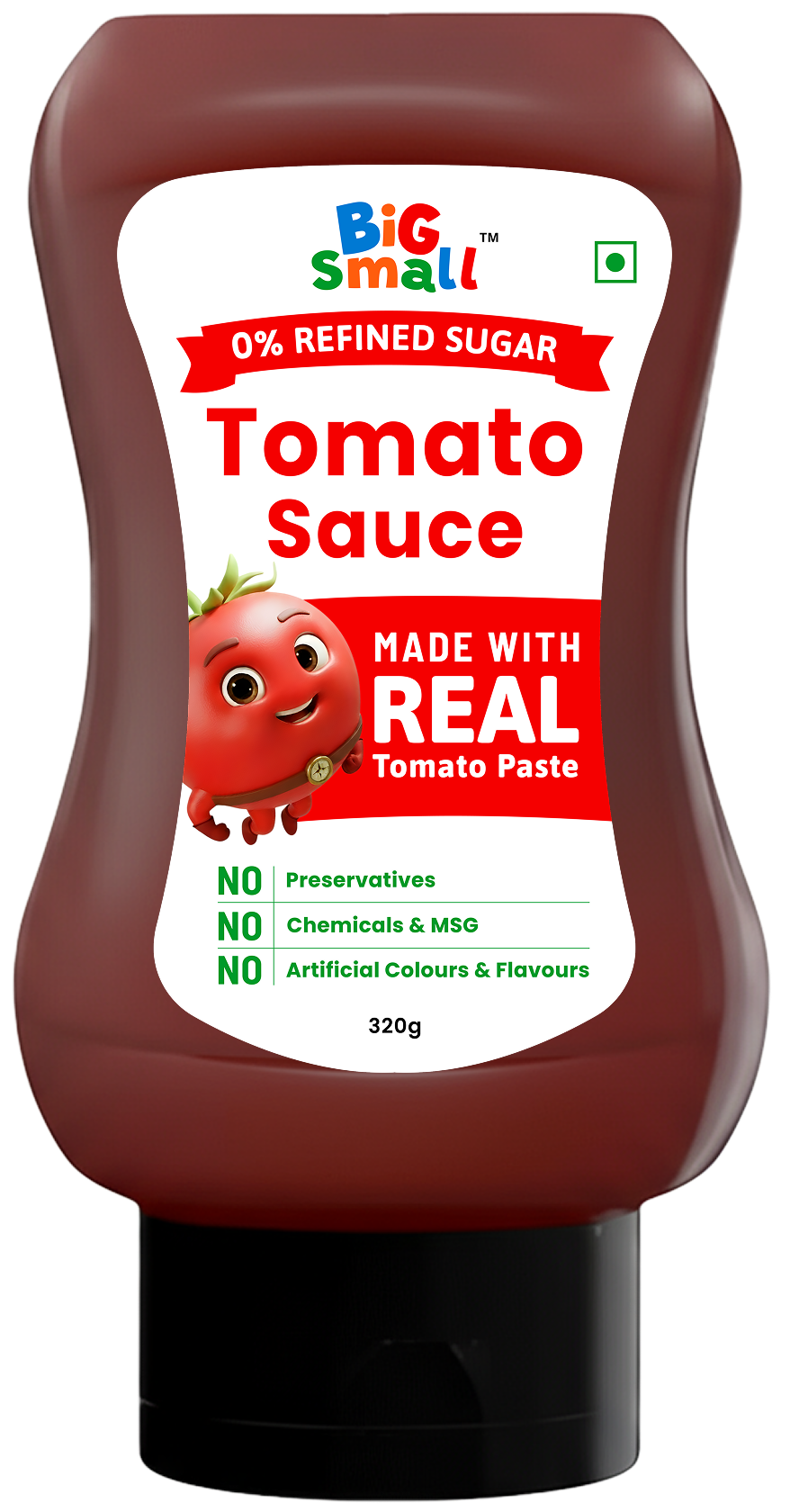
BiGSmall Kids Tomato Sauce
Real tomatoes, Jaggery, No Refined Sugar, No Added Preservatives, No Artificial Flavours, No Artificial Colors or Chemicals | Sweetened Only with Jaggery Made for everyday meals.
Shop nowThe Takeaway for Parents
Buying ketchup for children doesn’t need to be complicated—but it does deserve a moment of attention.
Before choosing a bottle, ask:
- What is sweetening this sauce?
- Are there unnecessary additives?
- Would I feel comfortable serving this regularly?
- Choose taste that fits everyday meals
Small, repeated food choices shape long-term habits. Choosing thoughtfully, even for everyday condiments, can make a quiet but meaningful difference.
Related posts

Ragi vs Oats for Kids: What to Choose for Everyday Meals
A balanced look at ragi (finger millet) and oats for children—nutrition, bone health, digestion, and how each fits into everyday meals, plus practical tips for parents.
6 min read
If You Can't Pronounce It, Don't Feed It: A Parent’s Guide to Reading Kid Food Labels.
Standing in the grocery aisle confused by long ingredient lists? This practical parent guide explains how to read kid's food labels, spot hidden sugars and additives, and make more informed everyday food choices—without fear or guesswork.
7 min read
12 Parenting Habits That Help Hyperactive Kids Regulate, Focus, and Thrive
Hyperactivity in children is often misunderstood as defiance, when it’s really a gap in self-regulation skills. This evidence-based guide explains what’s actually happening in the brain—and outlines 12 practical parenting habits that help hyperactive kids thrive at home and school.
8 min read